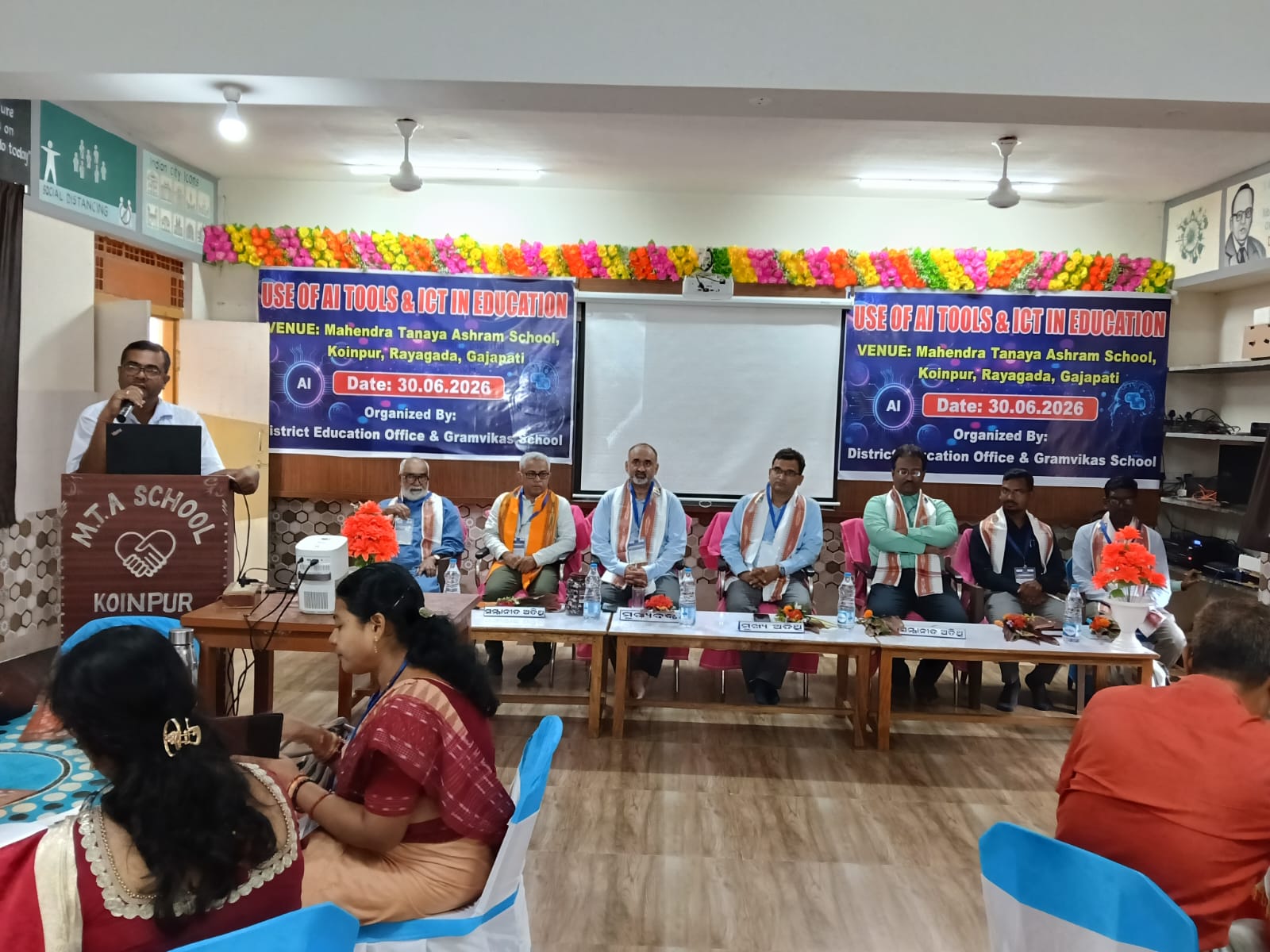
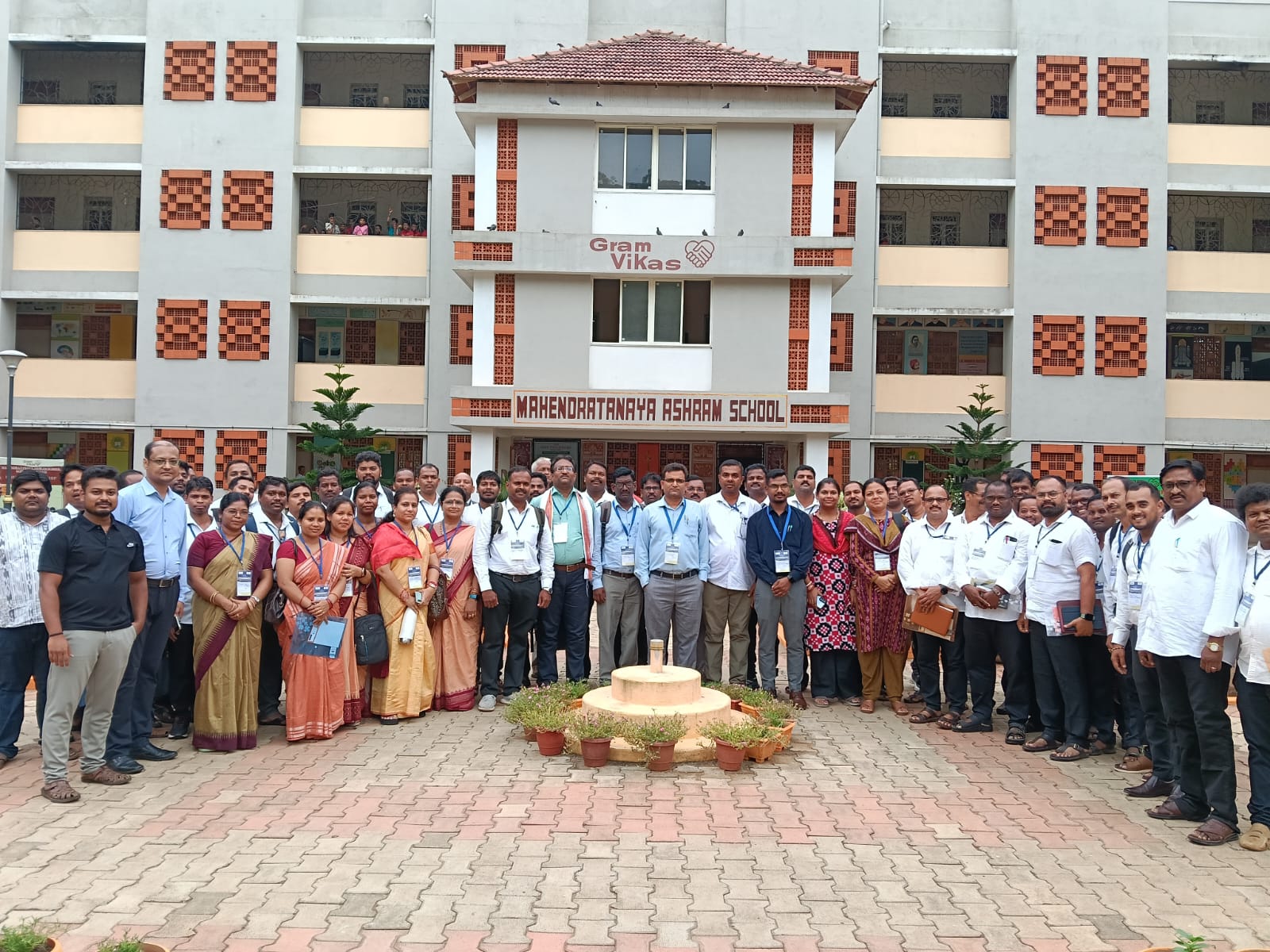
This week, I had the privilege of participating in a workshop at Mahendra Tanaya Ashram School in Koinpur - a Gram Vikas school nestled in the picturesque Mahendragiri hills of Gajapati district. The workshop brought together over 100 Head Masters and senior teachers from all seven blocks of the district.
Convened jointly by the school and the District Education Office under the guidance of the Collector Gajapati, it created a rare space for school leaders from some of Odisha's most remote regions to come together, learn, and reflect on the role of AI and ICT in education.

Walking into the hall, I found myself surrounded by experienced educators - Head Masters and senior teachers from across Gajapati's remote tribal blocks. Every day, they navigate limited resources, learning gaps and the challenge of ensuring that every child stays engaged in school. These were not people who needed to be told that teaching is demanding; they live that reality every single day.
And yet, there they were - curious, eager to learn, and willing to explore what AI might offer to strengthen their practice.
That willingness moved me.
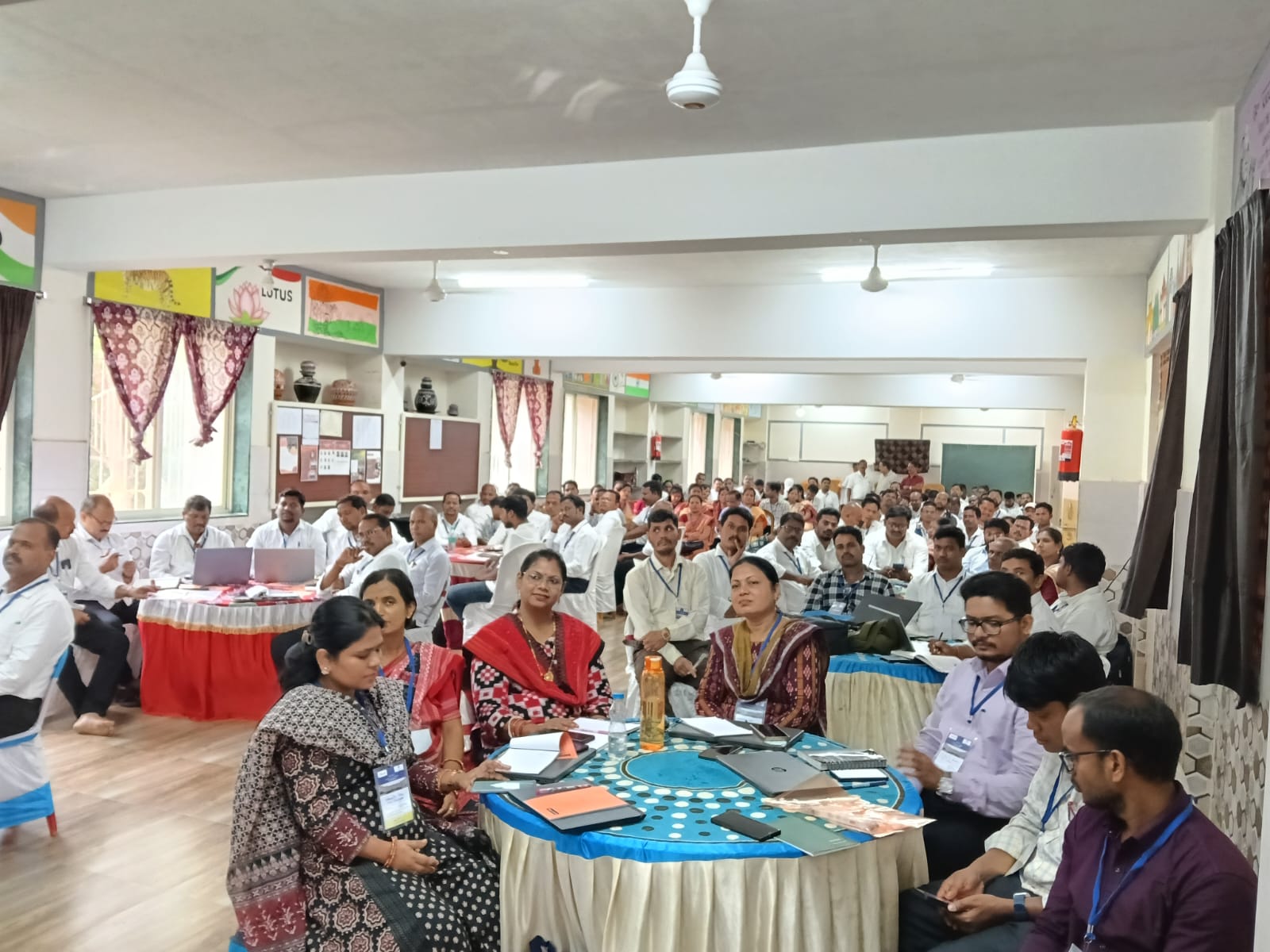
The sessions covered a range of AI tools - how they can assist in lesson planning, generate content, translate material into Odia, simplify their tasks. The conversations were lively. Some participants were already experimenting. Others were cautious. A few were quietly skeptical.
And I think that skepticism deserves respect — because it came from the right place.
One question kept surfacing, in different forms:
"If AI writes the lesson plan, what does the teacher bring?"
It is a deceptively simple question. But it goes straight to the heart of what NEP 2020 asks of us — not just the adoption of technology, but its thoughtful, human-centred integration. NEP's vision is of a teacher as a facilitator, a mentor, a guide for holistic development. Not a content-delivery machine to be replaced by a smarter one.
This is the tension I find myself sitting with: AI holds extraordinary promise for teachers in under-resourced settings - the ability to generate Odia-medium worksheets in minutes, to create differentiated content for mixed-ability classrooms, to reduce the paperwork burden that steals hours from actual teaching. For a Head Master running a 300-student school with 6 teachers in a tribal block, these are not small things. These are lifelines.
And yet, if used without intention, AI can quietly erode the very things we are trying to build - the habit of questioning, the craft of explaining, and the patience of listening that defines a great teacher. The risk is not that AI will replace teachers. The deeper risk is that it might replace the thinking that makes a teacher irreplaceable.
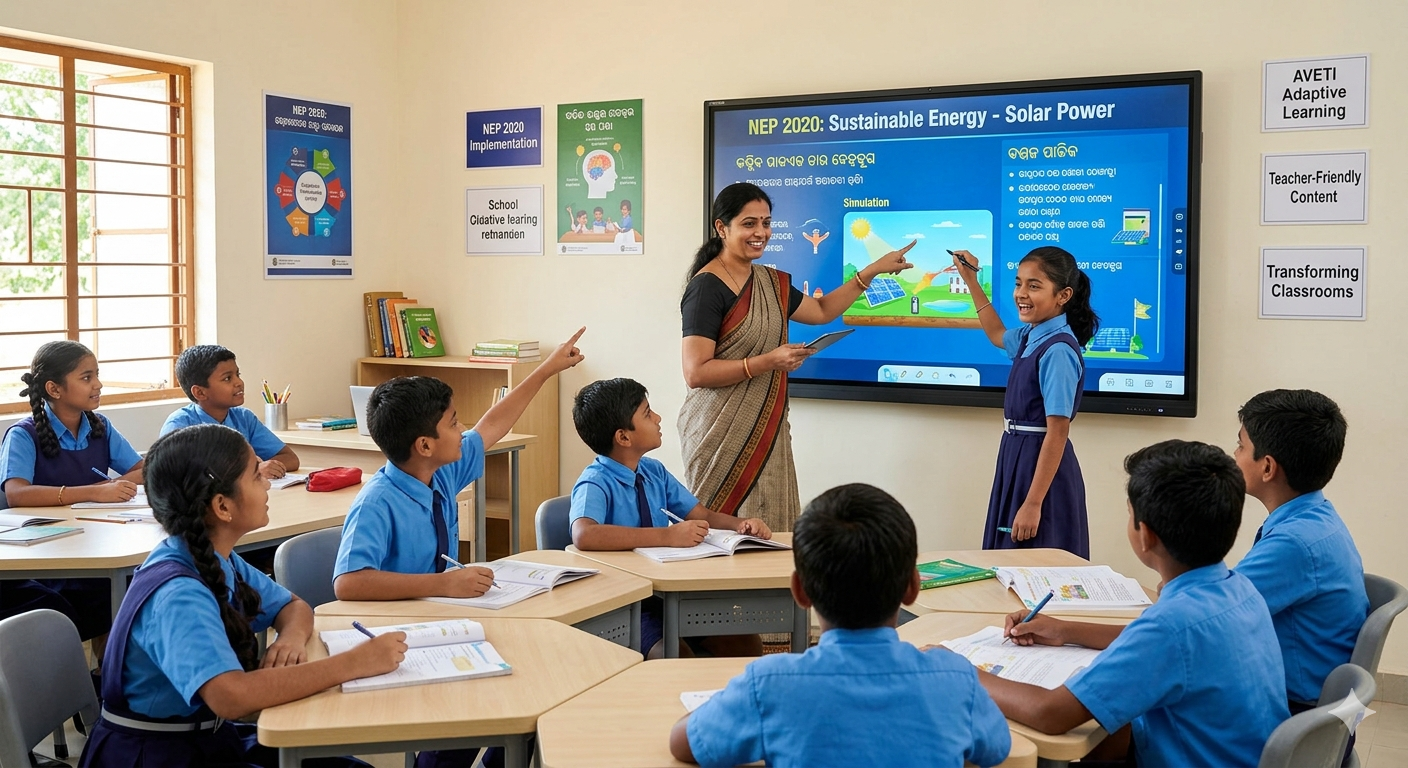
This is why at Aveti Learning, we have been deliberate about how we embed AI into our Teachers' App. The tools we are building are designed to assist, not to automate. To prompt reflection, not to bypass it. A teacher using our platform is still the author of the classroom - AI is just a more capable pen.
What gives me hope is that the conversation in Koinpur was not naive. These Head Masters did not treat AI as magic. They asked hard questions. They talked about equity - what about schools with no internet? They talked about trust - how do we know the content is accurate? They talked about identity - will this work in Odia?
These are exactly the right questions. And they are questions that administrators, technologists, and policymakers need to answer together.
The Collector's initiative in Gajapati to personally direct this awareness effort for school leaders is a model worth replicating. Change in education rarely starts with the tool. It starts with the leader who says: "Let us figure this out together."
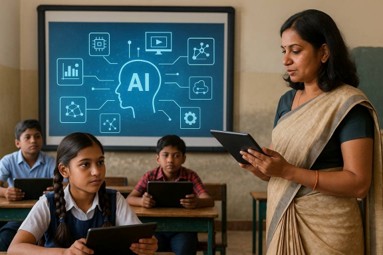
The Teacher Is Still the Author of the Classroom
As I left Koinpur, I thought about the school building behind those gates - the Odia letters carved above the entrance, the classrooms full of children from communities that have historically been the last to benefit from any wave of educational reform.
AI can either continue that pattern - or break it.
That choice belongs to us. Not to the algorithm.
Aveti Learning is working with schools across Odisha to build AI-assisted tools that are grounded in local language, low-infrastructure realities, and the lived experience of Odia teachers. If you are working in this space, I would love to connect.
#AIinEducation #NEP2020 #OdishaEducation #EdTech #TeacherEmpowerment #AvetiLearning