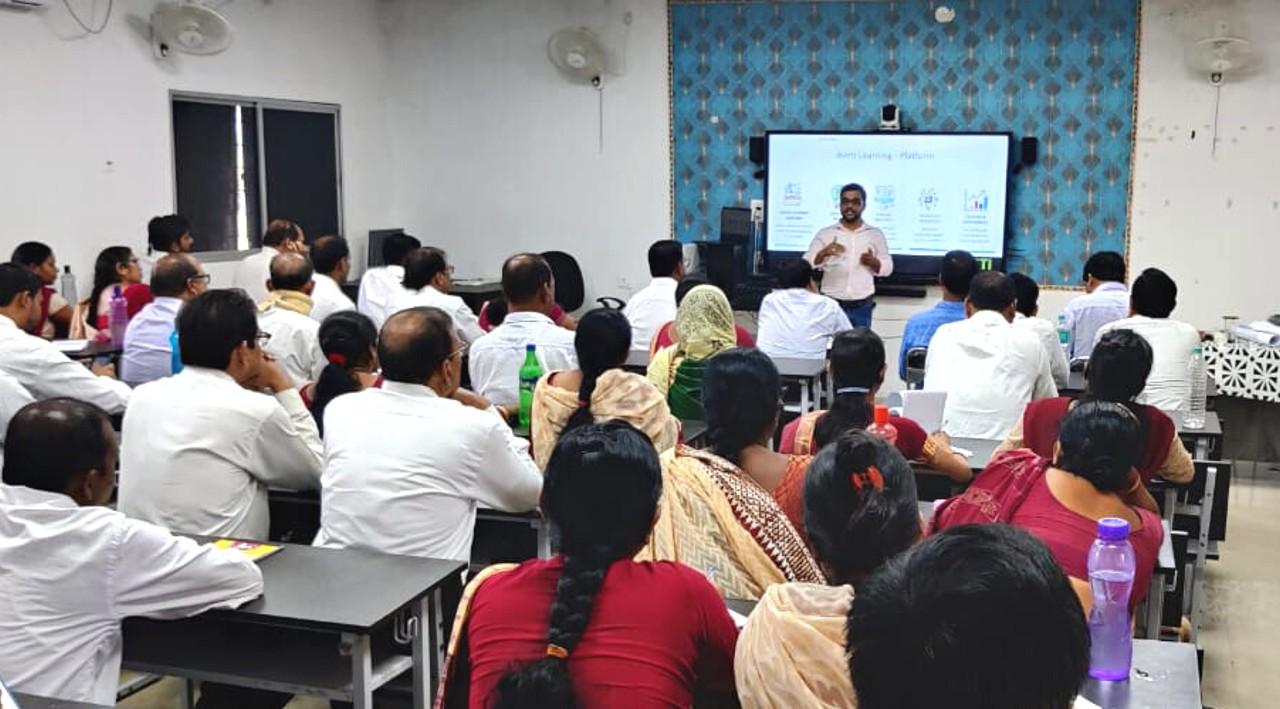
Over the years, our team has engaged with District Education Officers, academic leaders, educators, and subject expert teachers across multiple districts of Odisha. These conversations have provided valuable insights into the realities of teaching and learning, the challenges faced by schools, and the aspirations that drive educational transformation at the grassroots level.
We walked in to present Aveti’s digital learning solutions. We walked out with something far more valuable, with much deeper realization.
These conversations have changed how I think about EdTech entirely.

The Room That Changed the Question
In meeting after meeting, the pattern was the same. We’d set up our demo slides. We’d show the content library, the Teacher App, the animations, the question banks.
The rooms were engaged. Teachers were curious. And then, almost always, the senior official in the room would say something that stopped us in our tracks.
“This looks interesting. But tell me — how will it help us improve the number of students scoring A1 in Board examinations?”
One of the strongest messages emerging from our district engagements is that educational leaders are not looking for content repositories.
They are looking for solutions.
What Teachers Are Actually Carrying
It is easy to build EdTech for a romanticised version of the classroom. The reality our teachers described is considerably more demanding.
NEP 2020 has introduced welcome and necessary reforms - competency-based learning, greater focus on critical thinking. But in a classroom, often with 40 or 50 students, a teacher implementing NEP is carrying an enormous burden.
Teachers are expected to prepare lessons, conduct assessments, manage classroom activities, complete administrative responsibilities, implement new pedagogical approaches, and support students with diverse learning needs.
“We want to teach the way NEP intends. But we also need our students to perform. We need resources that help us do both — and we need them to be ready to face any exam.”
That’s not a complaint. That’s a professional asking for the right tools.
Many educators told us that one of their biggest challenges is not the lack of willingness to innovate.
It is the lack of time.
This is where educational technology can make a meaningful difference.
The EdTech Problem We Need to Admit
Here is the uncomfortable truth about much of the EdTech sector: we build solutions and then go looking for the problem they solve.
We invest in sophisticated platforms, polished interfaces, and compelling product demonstrations. We optimise for the pitch rather than the classroom. And then we are surprised when adoption stalls, when teachers remain disengaged, when schools do not renew.
What we heard consistently across these interactions is that the evaluation framework teachers and officials use is not “Is this technology impressive?”
It is “Will this help my students?” and “Will this make my job more manageable?” Those are the only questions that matter. Everything else is noise.
What We Are Learning to Do Differently
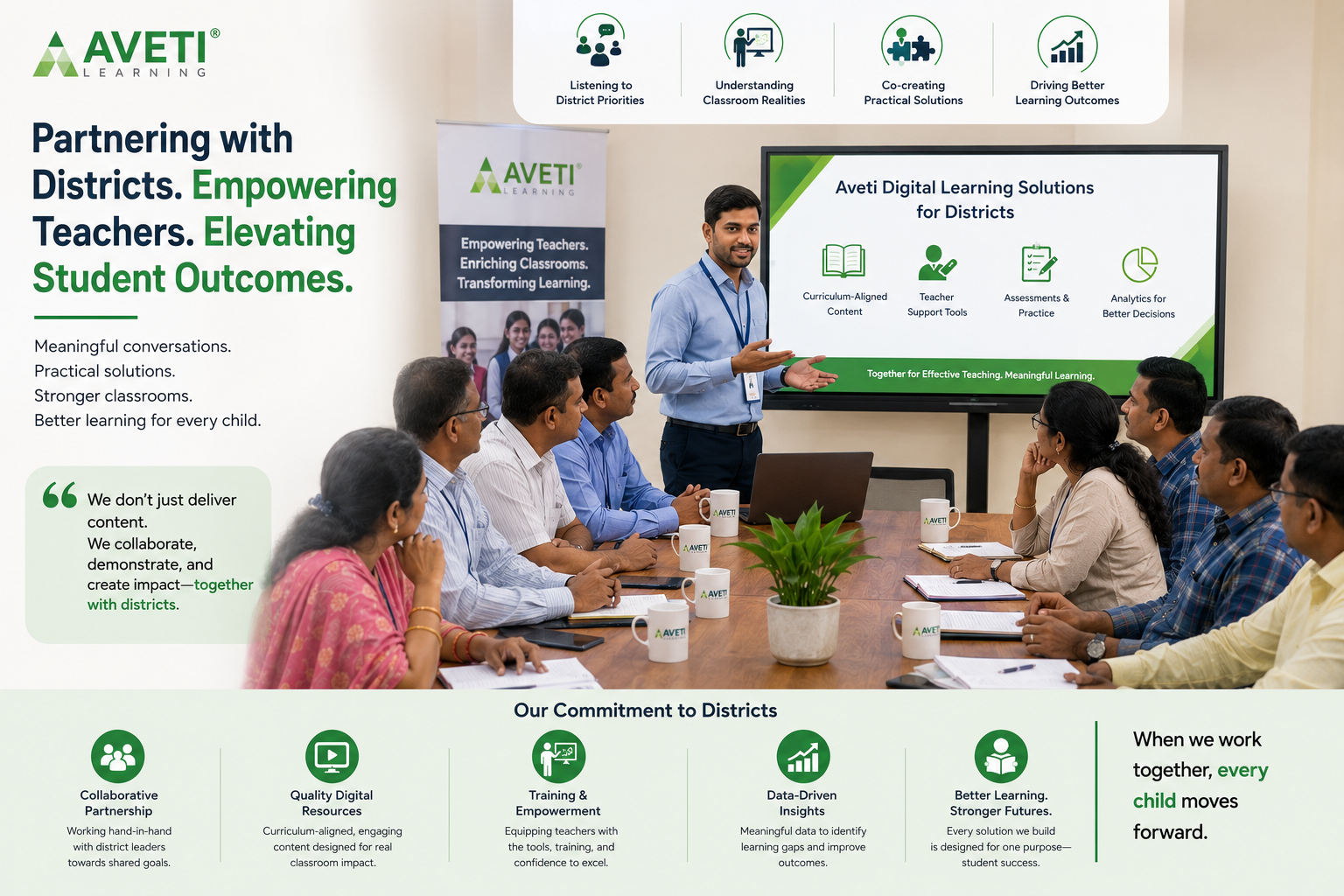
These interactions have reshaped how Aveti approaches district engagement. We are moving from product presentations to solution demonstrations.
Before we walk into a meeting, we now ask: What is this district’s current academic priority? What programme are they running? What are the DEO’s targets for this academic year?
The presentation changes completely when you start there. Instead of “Here is our content library for Classes 6 to 10,”
the conversation becomes: “We understand you are focused on improving board performance for high-potential students. Here is how our structured revision resources, practice question banks, and teacher support tools can support that specific goal.”
We are also ensuring that every interaction delivers immediate value. If a teacher can access curriculum-aligned lesson resources in minutes rather than spending hours preparing them, that matters.
If assessments and question banks are readily available, that matters.
If difficult concepts can be explained through engaging multimedia content, that matters.
If teachers can quickly identify learning gaps and provide targeted support, that matters.
“When teachers can experience the platform themselves, the conversation shifts. They stop evaluating it and start imagining how they would use it.”
That distinction: partner versus provider - is everything.
EdTech Should be Human-Centered
Perhaps the most important lesson from our district interactions is this:
The future of education will not be shaped by technology alone. It will be shaped by the partnership between teachers and technology.
The Human connection remains at the heart of learning.
At Aveti, our work across Odisha’s government schools has taught us that the most powerful thing a technology company can do is listen before it builds, it is about solving real classroom challenges, it is about supporting district priorities.
The conversations we are having across districts give us hope.
Because when educators, administrators, and technology providers come together around a shared purpose, educational transformation stops being a policy aspiration and starts becoming a reality.